Arthritis – when its not just the cold keeping us in bed.
As the temperature drops, many of us start to feel that familiar winter struggle of getting out of a warm bed in the morning. For some of our patients, however, it’s not just the cold mornings or cosy blankets — winter can genuinely worsen underlying arthritis, leaving them feeling stiffer, sorer, and less willing to move.
Arthritis is a progressive, degenerative condition affecting the joints. As cartilage wears down over time, inflammation and pain can develop, leading to reduced mobility and discomfort. Cold weather often exacerbates these symptoms, as lower temperatures can increase joint stiffness and make it harder for pets to “loosen up” after rest.
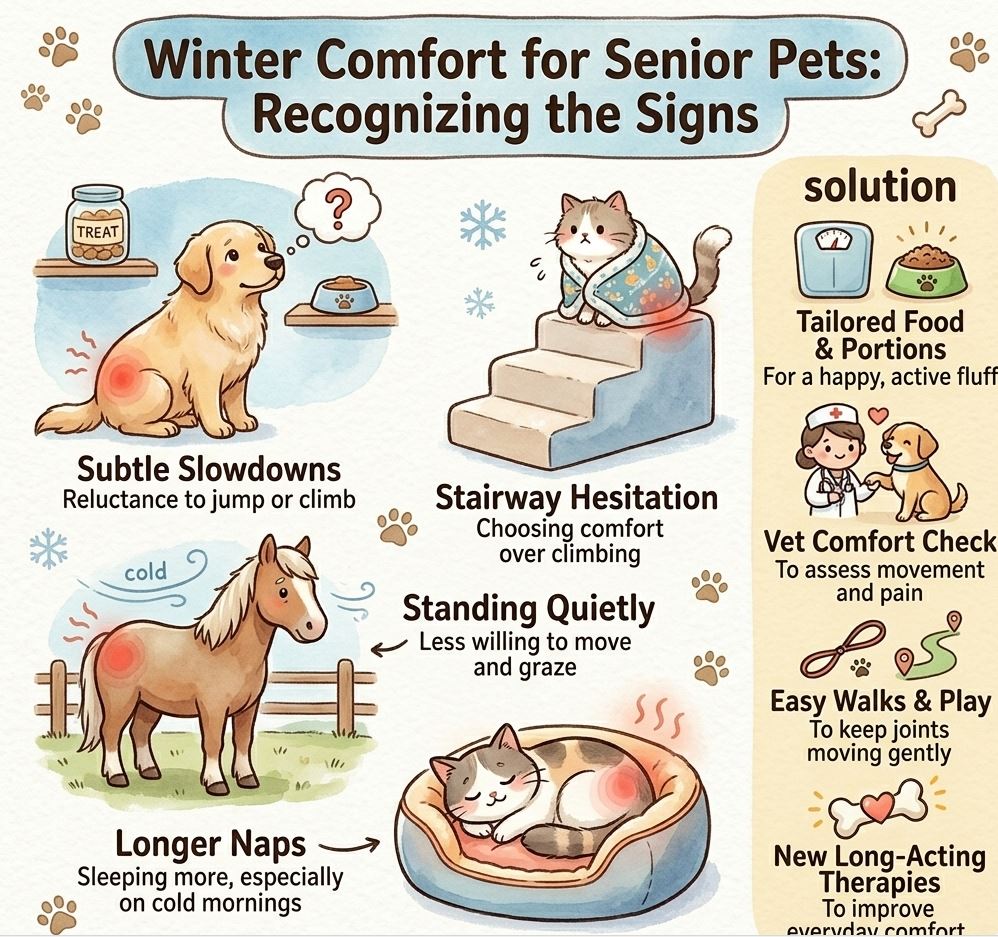
This isn’t limited to just cats and dogs. Our horses and other hoofed companions are also commonly affected. You may notice subtle changes at first — an older horse spending more time standing in the same spot in the paddock, being slower to move off, or showing reluctance when being brought in or out. Similarly, senior cats may appear to be sleeping more than usual, hesitate before jumping onto furniture, or avoid stairs they previously managed with ease.
One of the challenges with arthritis is that it often develops gradually, and because pets are so good at adapting, early signs can be easy to miss. It is very common for owners to assume these changes are simply “normal ageing,” when in fact there may be underlying pain affecting quality of life.
Arthritis is now recognised as one of the most common chronic conditions in older pets, and thankfully, there has been significant progress in how we diagnose and manage it. We now have a wide range of treatment options available — from weight management and tailored exercise plans, through to anti-inflammatory medications, joint supplements, and newer long-acting therapies designed to improve comfort and mobility.
If your pet is slowing down, reluctant to go for walks, struggling with stairs they once managed easily, showing stiffness after rest, or simply sleeping more during the colder months, it is worth considering whether arthritis could be contributing.
A veterinary assessment involves a detailed physical examination, including careful palpation of the joints to assess for pain, swelling, stiffness, and reduced range of motion. We also evaluate gait and mobility where possible to identify subtle changes in movement. In some cases, we may recommend further diagnostics such as X-rays to assess the degree of joint change and rule out other conditions. However, in many cases, a strong clinical suspicion of arthritis can be made based on examination findings alone.
The important thing to remember is that arthritis is manageable, and early intervention can make a significant difference to your pet’s comfort and long-term quality of life. If you are concerned about your pet, we are here to help — your pet’s comfort is always our priority, so please don’t hesitate to get in touch.
Love animals?
Get our news delivered to your inbox....
Subscribe to News
Our hours and location
- Monday 8am - 7pm
- Tuesday 8am - 5:30pm
- Wednesday 8am - 7pm
- Thursday 8am - 5:30pm
- Friday 8am - 5:30pm
- Saturday 9am - 1pm
All hours and every day,
we’re available on:
(02) 6238 1133
112b Molonglo Street Bungendore