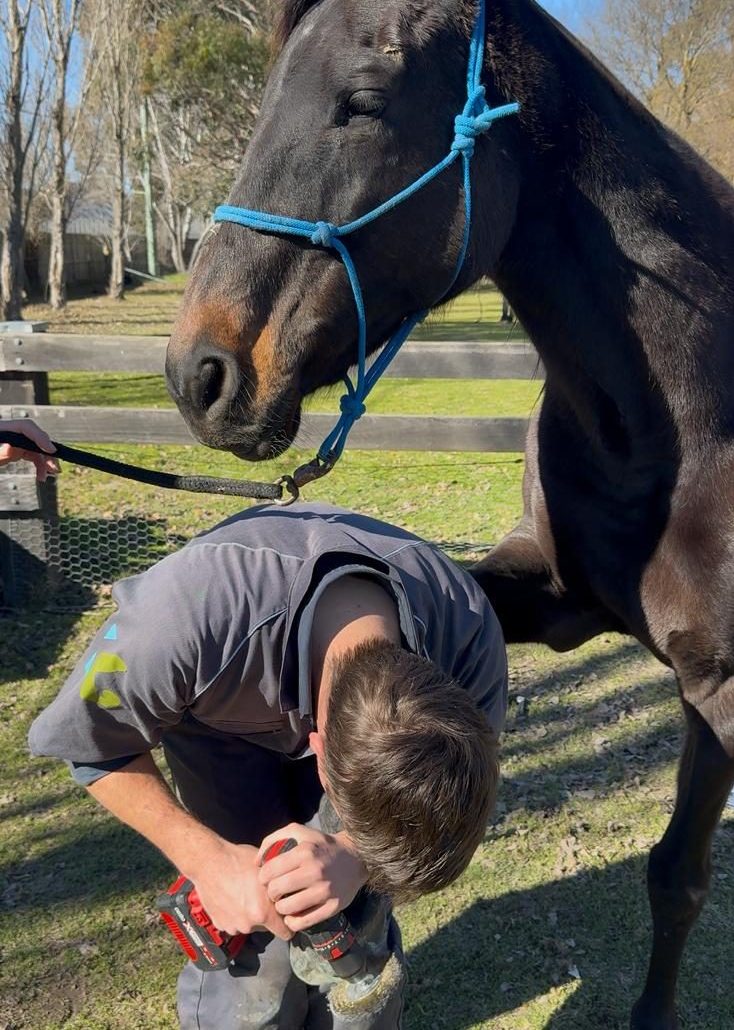
Spring Is Coming… and So Is Laminitis Season
Spring is just around the corner, and while we are all looking forward to warmer days, longer afternoons and watching everything turn green again, some of our equine friends may have a slightly different opinion about the arrival of spring.
For many horses and ponies, spring also means an increased risk of laminitis.
That beautiful flush of fresh green grass might look like a welcome change after winter, but rapidly growing pasture can be high in sugars and other non-structural carbohydrates. For horses and ponies prone to laminitis, too much of the wrong type of pasture can be enough to trigger a painful episode.
Whether you have an older pony who has battled laminitis before and needs careful lifelong management, or a young horse with no previous problems and you simply want to reduce their risk, nutrition plays an important role.
Of course, this is where things can start to feel a little overwhelming. There are countless feeds, supplements and products available, all claiming to be the best choice for your horse. So, how do you know what is actually appropriate?
Here are a few practical tips to help you navigate feeding your laminitis-prone horse or pony this spring. Keep in mind laminitis management has a wide spectrum, what works for one horse may not be enough for another.
First Things First: The Grass May Need to Go
If your horse or pony is currently suffering from laminitis, pasture access should generally be removed until they are completely comfortable.
For some horses and ponies, particularly those with ongoing or repeated laminitis, pasture access may need to be carefully managed long-term. This may mean keeping them off pasture altogether or using strategies such as restricted turnout, strip grazing or a grazing muzzle.
Every horse is different, so the level of restriction required will depend on their individual history and risk factors.
So what do we feed them?
For horses and ponies prone to laminitis, the aim is generally to keep the non-structural carbohydrate (NSC) content below 10% of the total dry matter intake.
This includes the sugars and starches found in pasture, hay and feeds.
The biggest challenge is that you cannot always tell whether a hay is low in sugar simply by looking at it. A hay that appears dry, mature or “safe” may still contain more sugar than expected.
The only way to truly know the carbohydrate content of your hay is to have it feed tested. Ideally, hay being fed to a laminitis-prone horse should have a NSC content of less than 10%
Roughage: The Foundation of the Diet
Even when we are trying to restrict calories, horses still need fibre for appropriate gut function.
As a general guide, horses should receive 1.5-2% of their body weight per day as roughage. For a 500 kg horse, this equates to 7.5 -10 kg of roughage per day.
If your horse is overweight and weight loss is required, this may be reduced to as low as 1.25% of body weight, but it is important to make sure that dietary restriction is being managed appropriately.
Some options that may be suitable include:
- Teff hay
- Meadow hay (only if tested as can be variable)
- Soaked beet pulp, such as Speedi-Beet
- Soaked lucerne hay – this can be helpful for horses that do not need to lose weight and need to keep their protein up. If soaking hay to reduce water-soluble carbohydrates, soak for at least 60 minutes and discard the water before feeding.
Hays that are often best avoided for laminitis-prone horses include ryegrass, oaten, wheaten and barley hays, as these can be higher in sugars and starches.
We are very fortunate in this area to have access to some great local feed supplies that regularly perform feed tests to assess the NSC levels.
What About Pellets and Hard Feed?
Not every horse or pony needs additional hard feed.
If your horse is maintaining weight well—or is already overweight—they may not need extra calories at all. Instead, a low-calorie vitamin and mineral balancer concentrate may be a better option to help meet nutritional requirements without adding unnecessary energy to the diet.
If your horse does need additional calories to maintain or gain weight, look for a low-GI feed suitable for laminitis-prone horses, with combined sugar and starch levels below 12%.
Try to avoid cereal-based feeds and grains such as:
- Oats
- Wheat
- Rice
- Barley
- Bran
- Pollard
- Steam-flaked or extruded grains
These feeds can contribute significant amounts of starch and are generally not ideal for horses at risk of laminitis.
Don’t Forget the Supplements
When a horse’s diet is based largely on hay, there may be vitamin and mineral deficiencies depending on the type and quality of the forage. This can be ok in the short term to aggressively cut all sources of sugars, but it will need to be balanced in time.
A suitable vitamin and mineral supplement may therefore be required.
Some horses may also need additional protein. Depending on the individual horse and their overall diet, suitable protein sources can include:
- Soybean meal
- Cracked lupins
For horses that need help gaining weight, vegetable oils can also be used to add calories without adding large amounts of sugar or starch.
Unfortunately for those horses with a sweet tooth—molasses and sugary treats are best left off the menu.
Managing Time on Pasture
For many owners, completely removing a horse from pasture can be tricky. If pasture access is suitable for your case, careful management is important.
A few strategies include:
- Feed hay before turning your horse out, so they are not heading onto the pasture hungry and ready to gorge themselves.
- Pasture sugars are generally lower in the morning, with an important exception being after a frost, when sugar levels can remain elevated.
- If appropriate for your horse, consider short periods of grazing in the morning and bring them back in before 2 pm.
- During spring and autumn, pasture access may need to completely cut for particularly susceptible horses and ponies.
- Strip grazing can help control the amount of pasture available.
- Grazing muzzles can also be an extremely useful tool for horses that need to remain on pasture but require restricted intake.
Pastures dominated by ryegrass, phalaris or fescue, as well as rapidly growing clover pastures in spring, may present additional challenges for horses and ponies prone to laminitis.
Every Horse Is Different
The most important thing to remember is that there is no single feeding plan that is perfect for every horse.
An overweight pony with a history of repeated laminitis will need a very different approach to an underweight horse that is recovering from a laminitic episode. Their pasture, hay, workload, age and individual nutritional requirements all need to be considered.
With so much information—and so many feeds and supplements—available, it can be difficult to know where to start. If you are unsure about your horse or pony’s diet, pasture access or laminitis risk, please book a time with us to go through the individual factors that make up your situation and help work out the best possible solution.
We are always happy to help answer your questions and work with you to find a feeding and management plan that gives your equine friend the best possible chance of enjoying spring without the unwanted drama of laminitis.
Love animals?
Get our news delivered to your inbox....
Subscribe to News
Our hours and location
- Monday 8am - 7pm
- Tuesday 8am - 5:30pm
- Wednesday 8am - 7pm
- Thursday 8am - 5:30pm
- Friday 8am - 5:30pm
- Saturday 9am - 1pm
All hours and every day,
we’re available on:
(02) 6238 1133
112b Molonglo Street Bungendore